How Desert Cacti Survive, Thrive and Shelter Wildlife
Desert cacti (Cactaceae spp.) are built for heat and drought. Their waxy, expandable skin, varied shapes, slow growth and long lives suit dry gardens — and their spines don't stop animals from using them as homes.
By Kai Lee
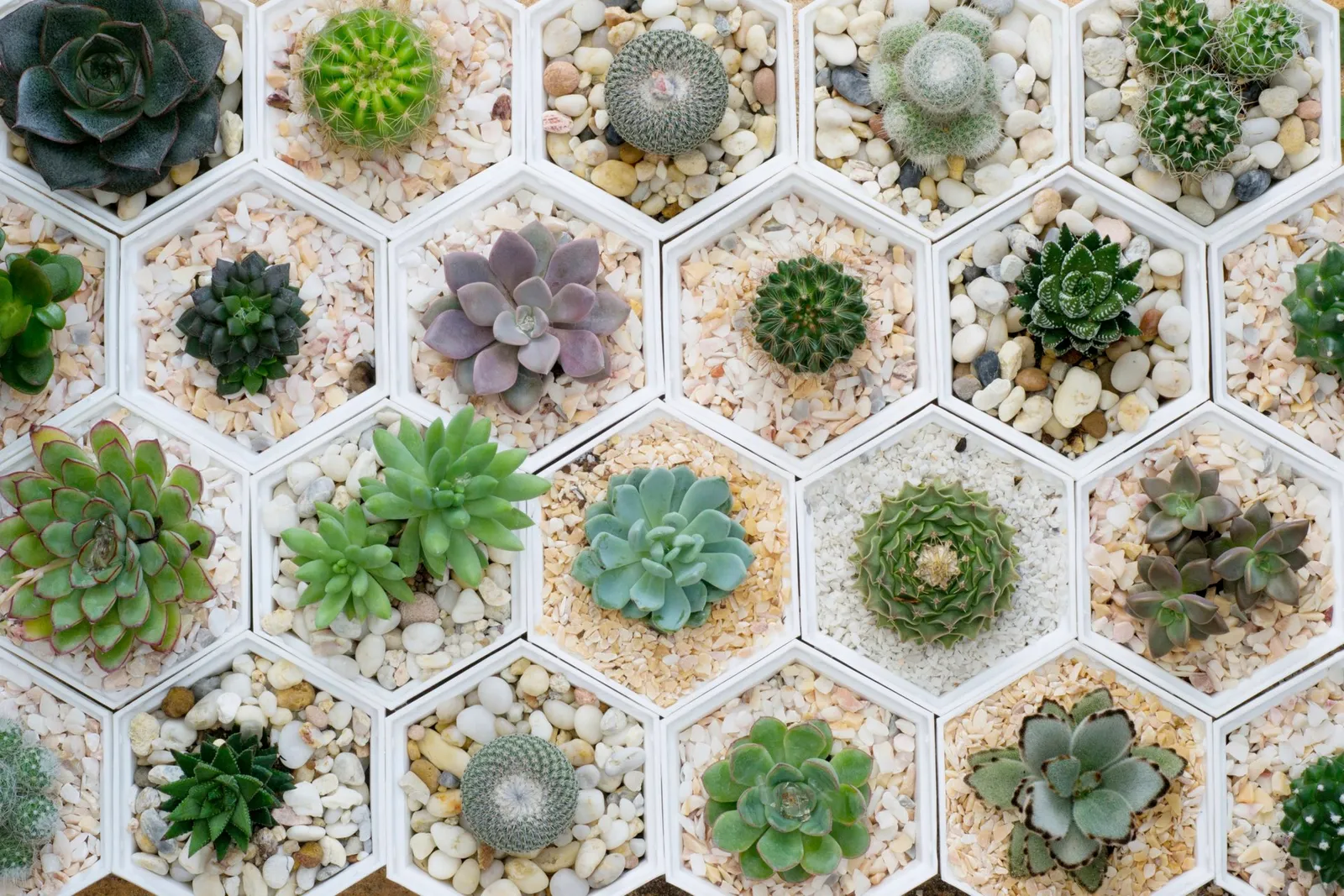
An overhead view of potted desert cactus plants.
When you think of a desert, a tall cactus with arms stretching toward the sun often comes to mind. Desert cacti (Cactaceae spp.) are adapted to hot conditions with very little water. Some species actually tolerate much colder climates, so not every cactus grows in the desert -- but the desert dwellers share several traits, and many of those traits work well in home gardens.
A Water-Holding Skin
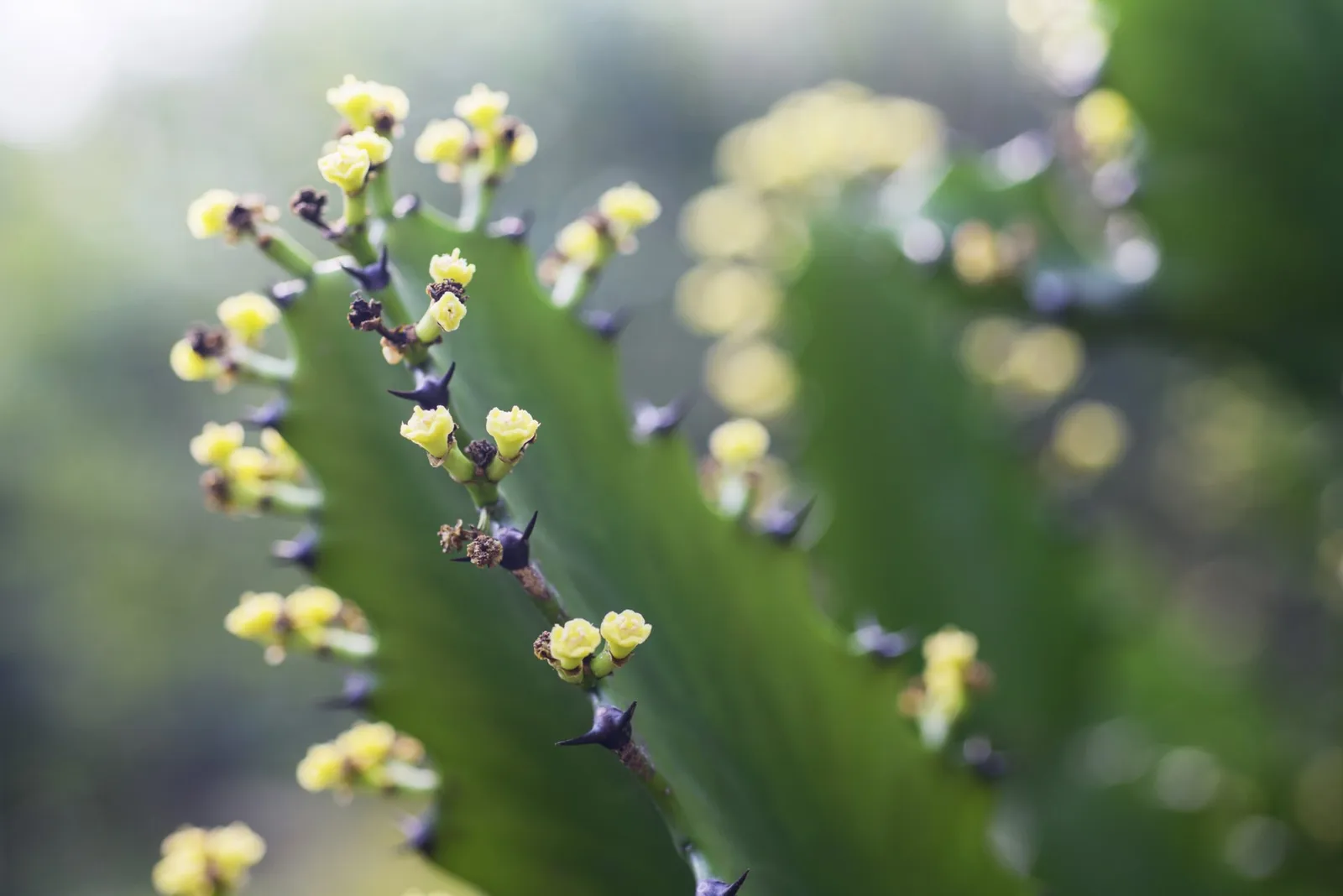
A close-up of yellow blooms on a cactus plant.
Most desert cacti have a thick, waxy outer layer. This skin guards the plant's water reserves and limits evaporation, which makes these plants suited to hot, dry spots in the home garden or to low-water landscapes. Thick as it may be, the skin is not rigid: it stretches and shrinks as water levels rise and fall. Spines often cover the skin, and they vary widely -- long, short, hooked, sharp or even soft. They deter some, though not all, of the hungry animals of the desert. Every desert cactus flowers as well, with blooms in yellow, purple, orange, red or white. You may miss them, since some last only a day or open only at night, but the flowers -- and the seeds they produce -- are how cacti reproduce.
Many Forms
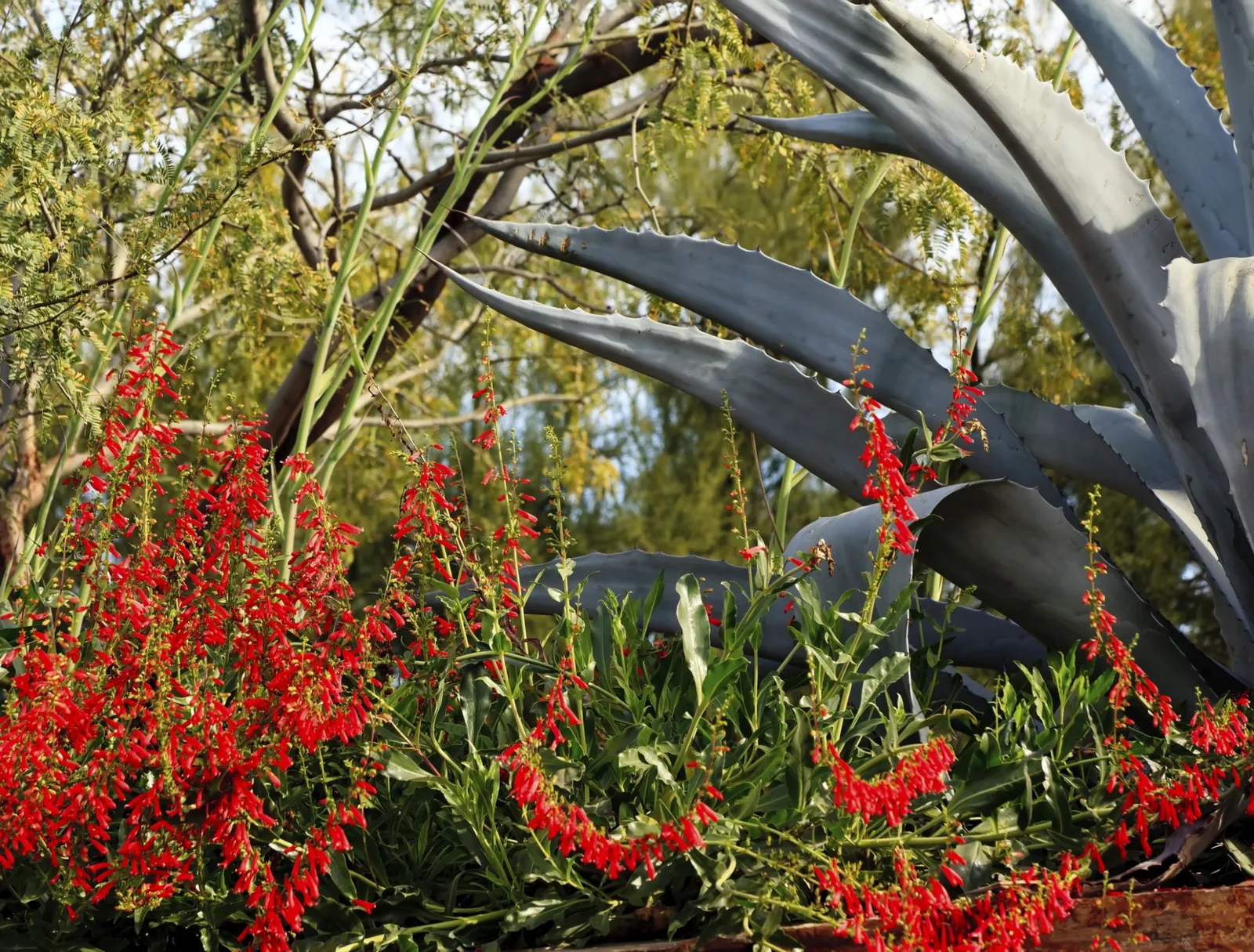
A variety of desert cactus plants grow in a garden.
Desert cacti range widely in shape and size. The biggest can rise more than 40 feet, with arms as thick and long as tree limbs, while others spread across the ground and can fill borders or serve as ground cover in a garden. Elongated stems are common, but some plants are made of several short joints. Surfaces may be smooth or covered with ridges, bumps or ribs. The fishhook barrel cactus (Ferricactus wislizenii), for instance, is round and stout and hardy in U.S. Department of Agriculture plant hardiness zones 8 through 11; it often does well in containers, provided the base has holes for drainage. Other cacti are round but flat, much like ping-pong paddles.
A Long Tenure
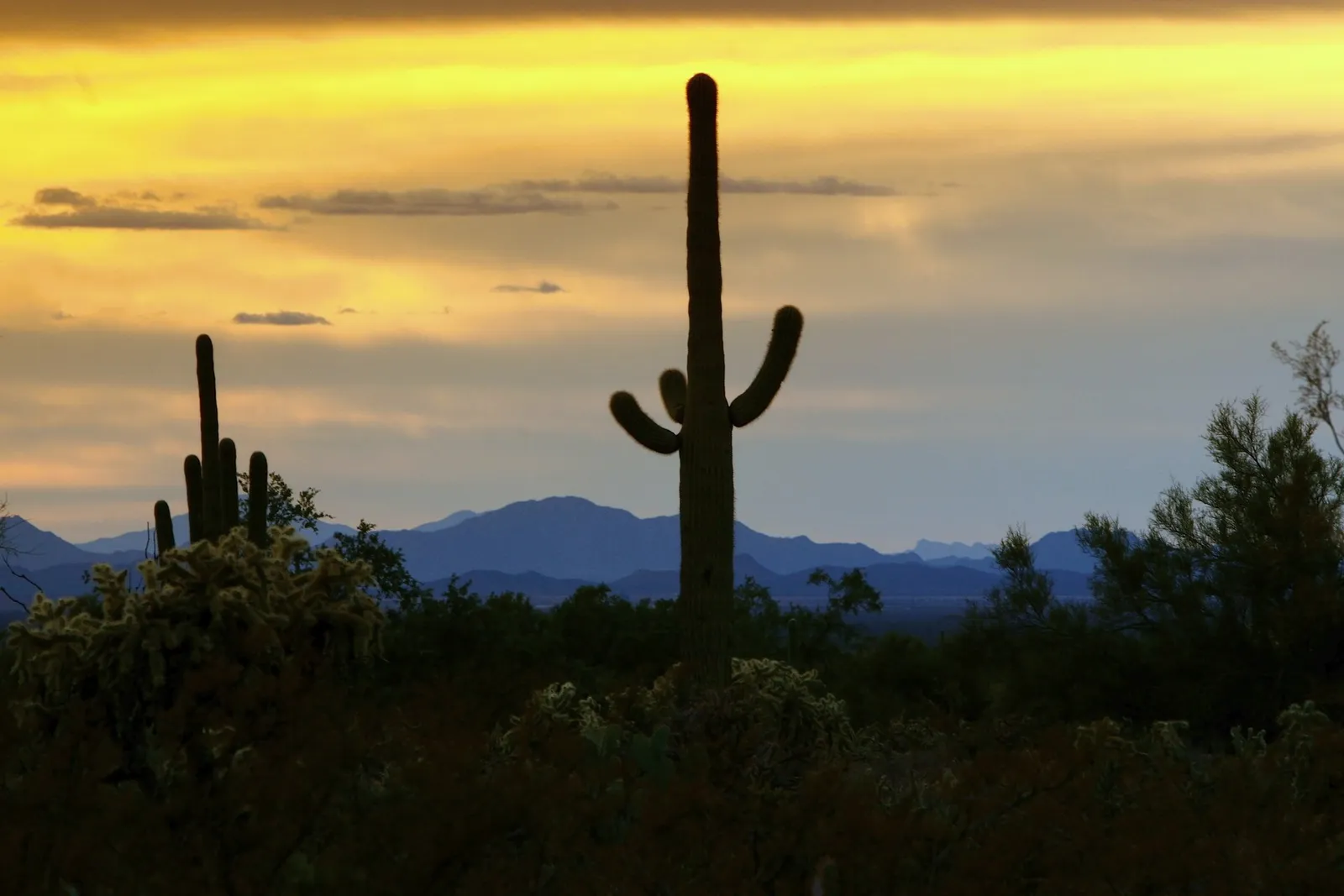
The silhouette of a saguaro cactus in the desert at sunset.
Many desert cacti are long-lived. The large, tree-like saguaro (Carnegiea gigantea), for one, can reach 200 years of age. It grows in USDA plant hardiness zones 9 and 10, and its longevity stems from its adaptation to desert conditions and from its slow growth, a trait it shares with many other cacti. In their natural habitat, desert cacti live an average of 50 to 200 years. A garden specimen may not last as long, but it is still likely to remain in your landscape for many years.
Useful to Wildlife and People
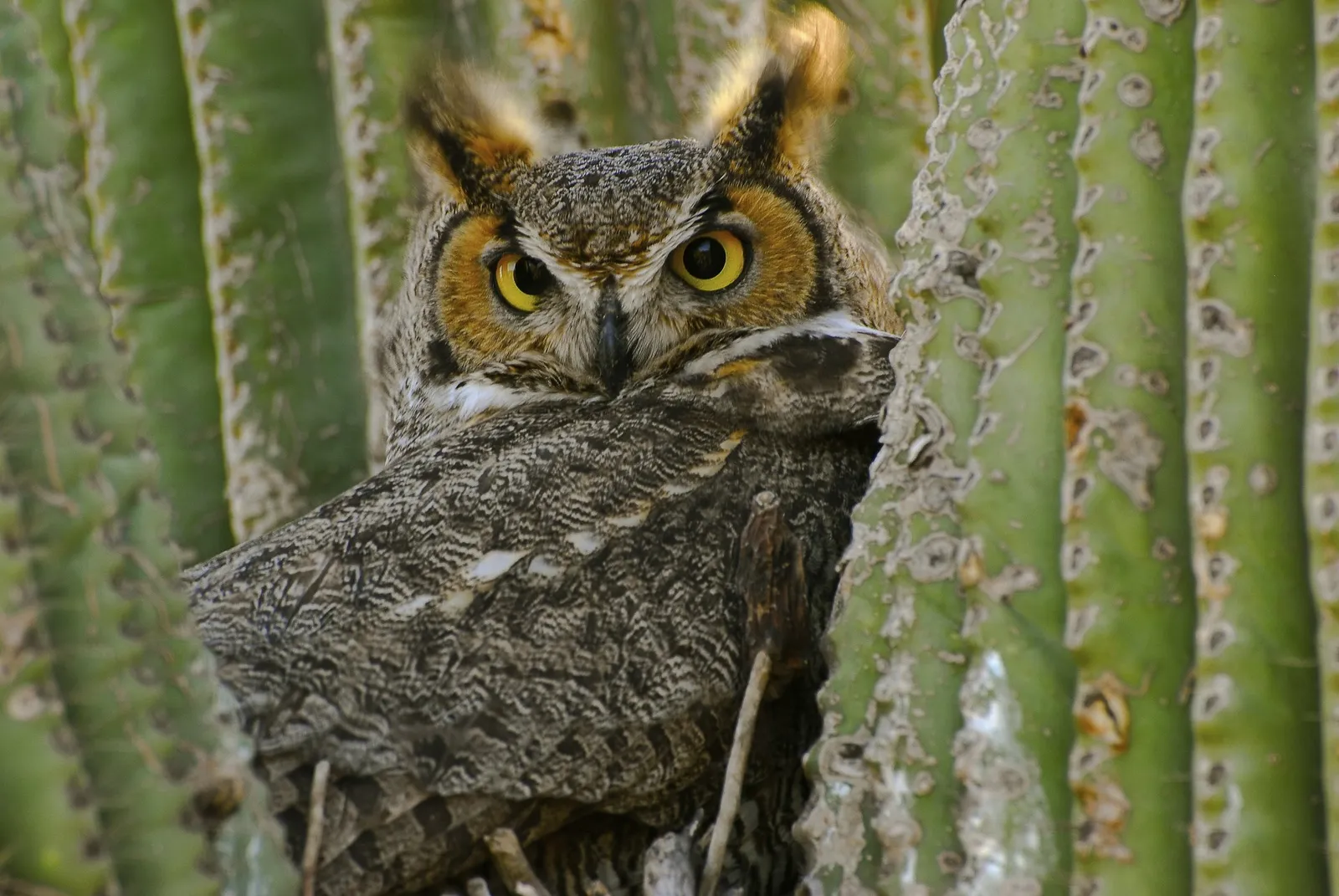
A Great-Horned owl is tucked in between the arms of a desert cactus.
Spines may discourage an animal from chewing on a cactus's skin, but the plant still serves animals in other ways. Many animals make their homes in cacti, either hollowing out the inside or building a nest from cactus parts. Packrats, for example, gather the stems of cholla cactus (Cylindropuntia fulgida), which detach readily from the plant, and use them as the walls of their nests. Cholla cacti are hardy in USDA zones 8 through 11. Cacti are useful to people too, and not only as ornamentals: the "ribs" of a dead saguaro are as strong as wood and can be used to build furniture.