Tulsi Harvest and Preservation Guide
Holy basil (Ocimum tenuiflorum) is best gathered in the morning, and after picking, the leaves can be used fresh or preserved by drying or freezing to keep for about a year.
By Harper Hall5 steps
Store your holy basil properly to preserve its quality.
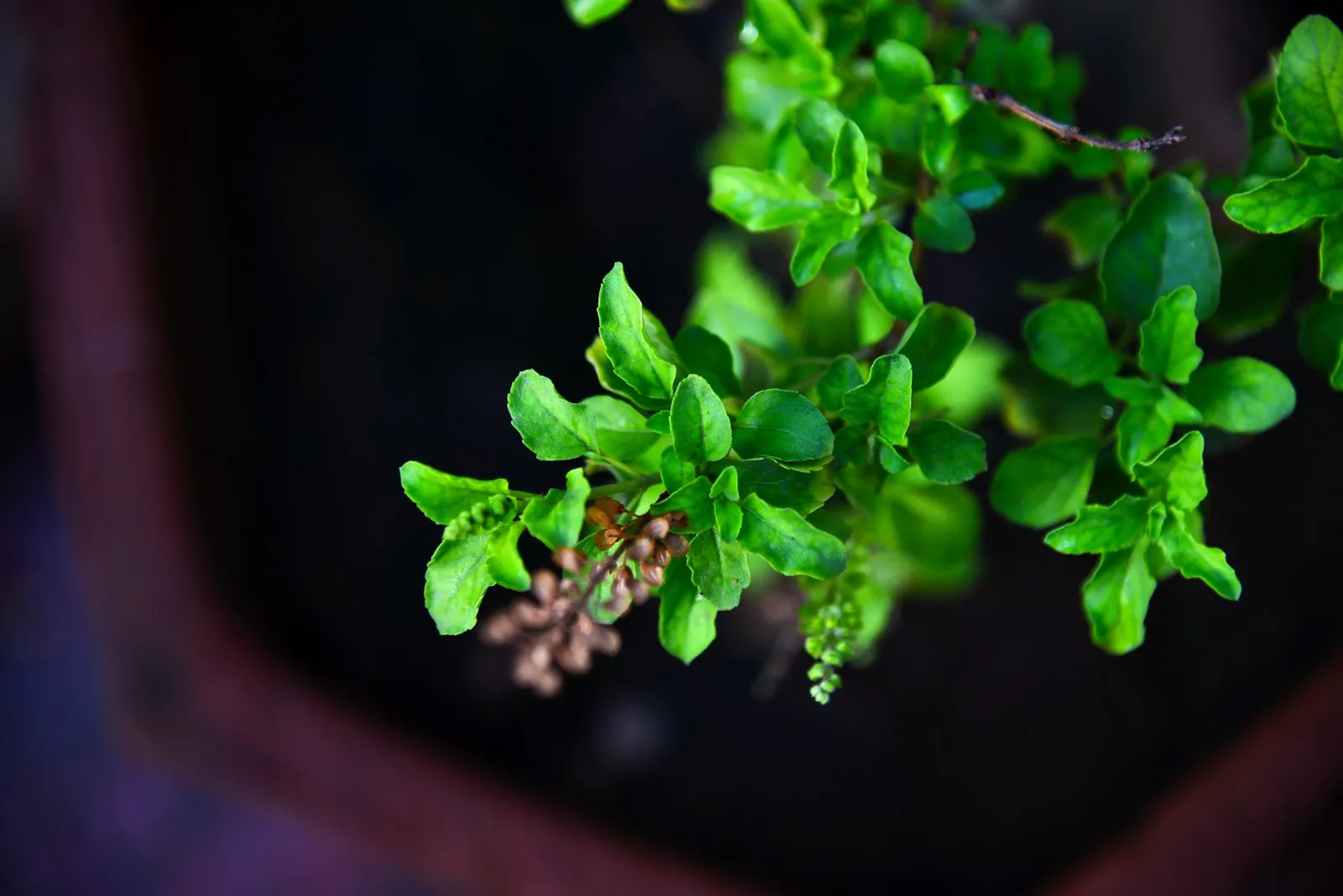
Holy basil—known as tulsi in India and botanically as Ocimum tenuiflorum (USDA hardiness zones 10–12)—has a warm, pungent aroma with a mildly spicy scent. This sweet, uniquely fragrant herb deteriorates quickly after harvest, so drying or freezing the crop is necessary to have it available during winter. Pick holy basil before flowers appear, and prevent it from going to seed, since both flowering and seeding can alter the flavor. If you want the color of the flowers in your dried holy basil blend, wait until the flower heads open.
Key Traits of Holy Basil
Holy basil grows as an annual, a short-lived perennial, or a sub-shrub. It belongs to the mint family Lamiaceae and is native to tropical and subtropical regions of Southern Asia. It is closely related to culinary sweet basil (Ocimum basilicum), but while sweet basil leaves are solid green, holy basil foliage has a purple tint. According to NC State Extension, sweet basil also produces larger flowers and lives longer than holy basil.
Holy basil has an upright, multi-branched growth habit and quickly reaches a mature height of about 3 feet. It performs best in full sun and tolerates a wide range of soils as long as they are well-drained and not prone to staying wet. The highly fragrant, oblong leaves are hairy, measure roughly 1 to 3 inches long and an inch wide. Tubular flowers come in pink, white, or lavender. Holy basil also grows well in containers that have bottom drainage.
For the best flavor, harvest before the holy basil plant blooms. Although the blooms are edible, the basil can develop a bitter taste if allowed to flower. You can also extend the harvest by snipping off flowers as they begin to form and before the plant goes to seed, according to Iowa State University.
Step 1: Get Ready to Harvest
Cut holy basil early in the morning before the day heats up, when the flavor is at its best. Use clean pruning tools or scissors to avoid transferring disease to the plant. Wipe the blades with something like alcohol.
Step 2: Harvest the Holy Basil Plant
With clean tools, snip off the desired portion of leaves and stems from the holy basil plant. Do not remove more than half of the plant so it can regrow additional leaves for harvest in several more weeks. Pinch off any discolored or damaged leaves.
Step 3: Keep Basil in Water
Place any fresh holy basil you do not plan to use immediately in a glass of water. The freshly cut stems store well in the water-filled container on a kitchen counter for a couple of days.
Step 4: Dry the Holy Basil
Dry the basil by tying several bunches together with twine and hanging them upside down in a cool, dark, well-ventilated area. Once dry, crush the leaves and store them in a plastic container. Dried holy basil keeps for approximately one year.
Step 5: Freeze the Holy Basil
To freeze holy basil, first remove the leaves from the stems, place them in a food processor, and chop them. After chopping, add a little water or oil to the mixture, pour it into ice cube trays, and freeze for later use. Frozen holy basil keeps for approximately one year.