How Art Changed From the Middle Ages to the Renaissance
After Rome's fall, the medieval era ran from about the 5th through the 15th century, with the Renaissance starting before it ended. Italy was where the Renaissance took root in the 14th century, and it later reached England, France and present-day Germany through the 16th century.
By Toby Gray
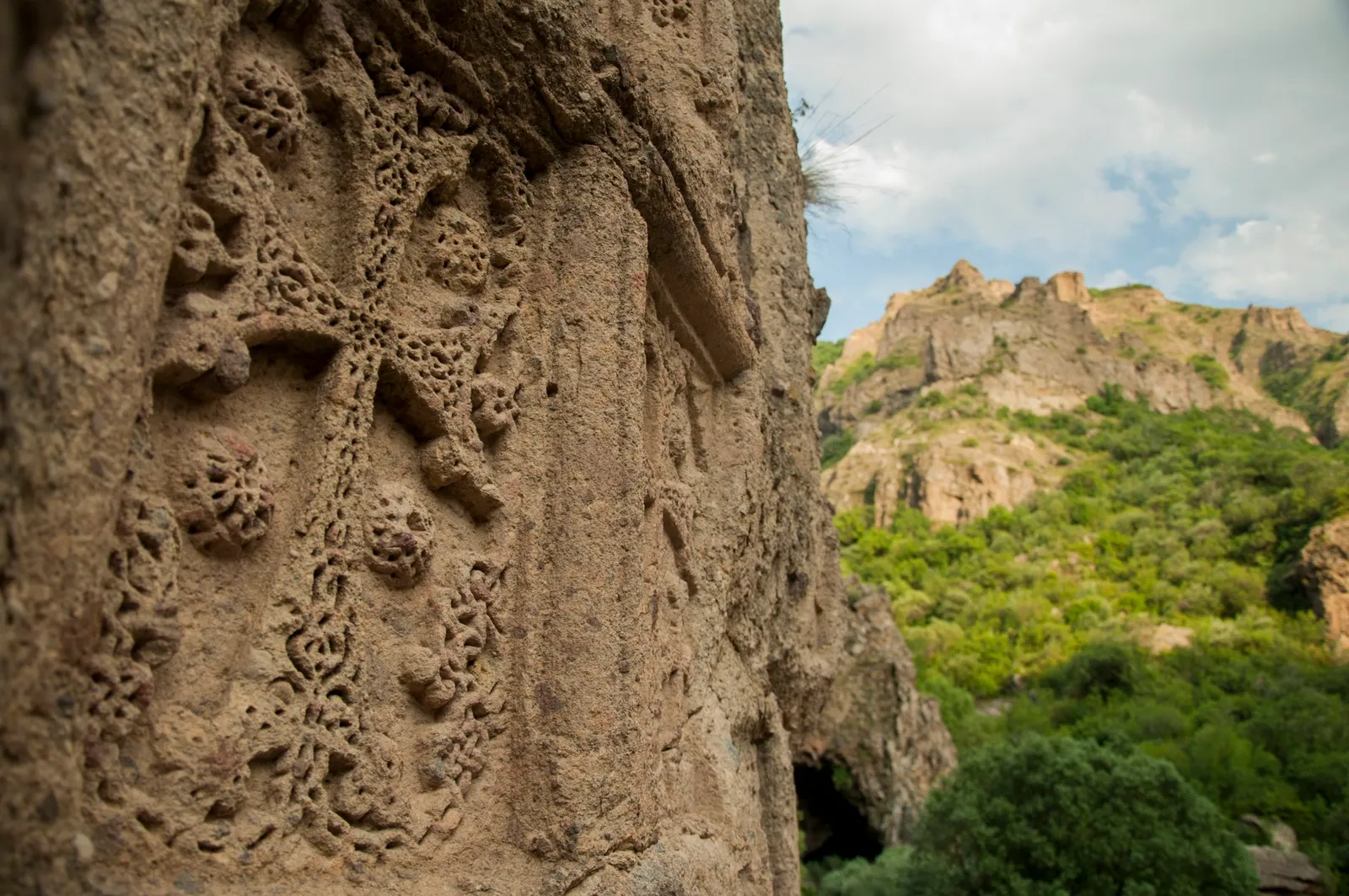
Close-up of medieval art carved into a large rock.
When the Roman Empire fell, the period that followed—the Middle Ages—stretched from roughly the 5th to the 15th century, and the Renaissance began before it was over. The Renaissance got its start in Italy in the 14th century and carried on into the 16th century, spreading to England, France and the area that is now Germany. Because Renaissance is French for rebirth, the movement came to stand for a revived interest in Humanism, classical studies and cultural progress as it moved across Europe; architecture, the arts and literature were all transformed.
Painting
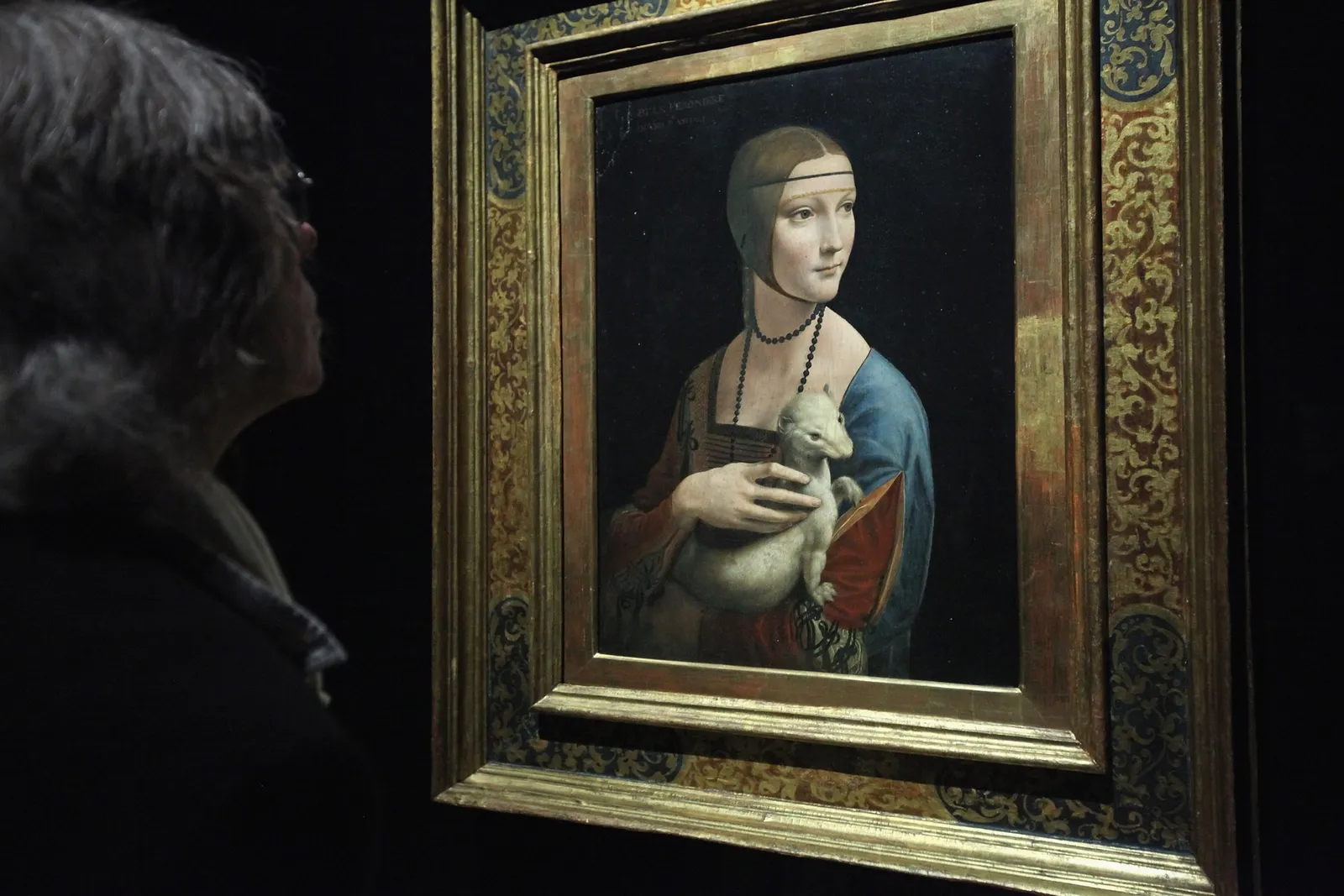
A museum patron looks at the painting "Lady With An Ermine", by Renaissance painter Leonardo da Vinci
Medieval painters generally did without perspective: the size of a human figure depended not on where it stood in the picture but on other considerations, such as social rank. People and their surroundings were shown flatly, in two dimensions, and without realism. In the early Renaissance, however, painters such as Masaccio of Florence started employing perspective to give an illusion of depth and to draw attention to significant figures or objects. The result was human figures rendered accurately and with correct anatomy, which reflected the Renaissance admiration for the ideal human body.
Sculpture
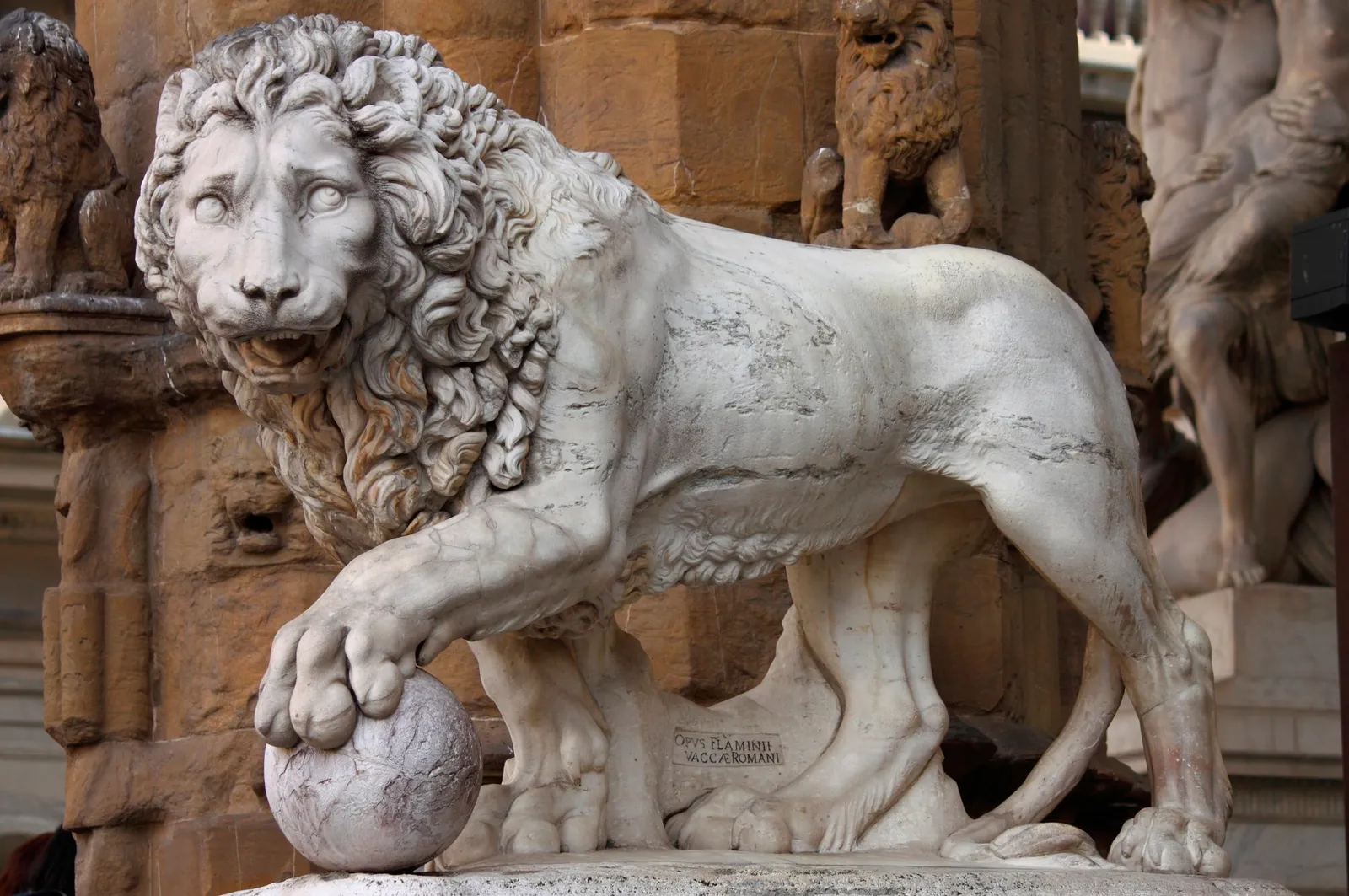
A lion statue at Signoria Square in Florence, carved by Donatello
In the Middle Ages, sculptors usually carved human figures as parts of larger architectural projects, but Renaissance sculpting moved away from that. The gate of Canterbury Cathedral in England, built at the start of the English Renaissance, for instance, shows Christ seated in judgment. The figure of Christ appears to come out of the walls behind him and, as with other medieval sculptures, belongs to its setting—yet it also pulls away from that setting and stands as a work of art in its own right. The sculpture thus anticipates the Renaissance turn toward independent human sculptures. Donatello and other major sculptors carried this further, carving solitary statues with no surrounding context and focusing their art entirely on the glory of the human figure.
Architecture
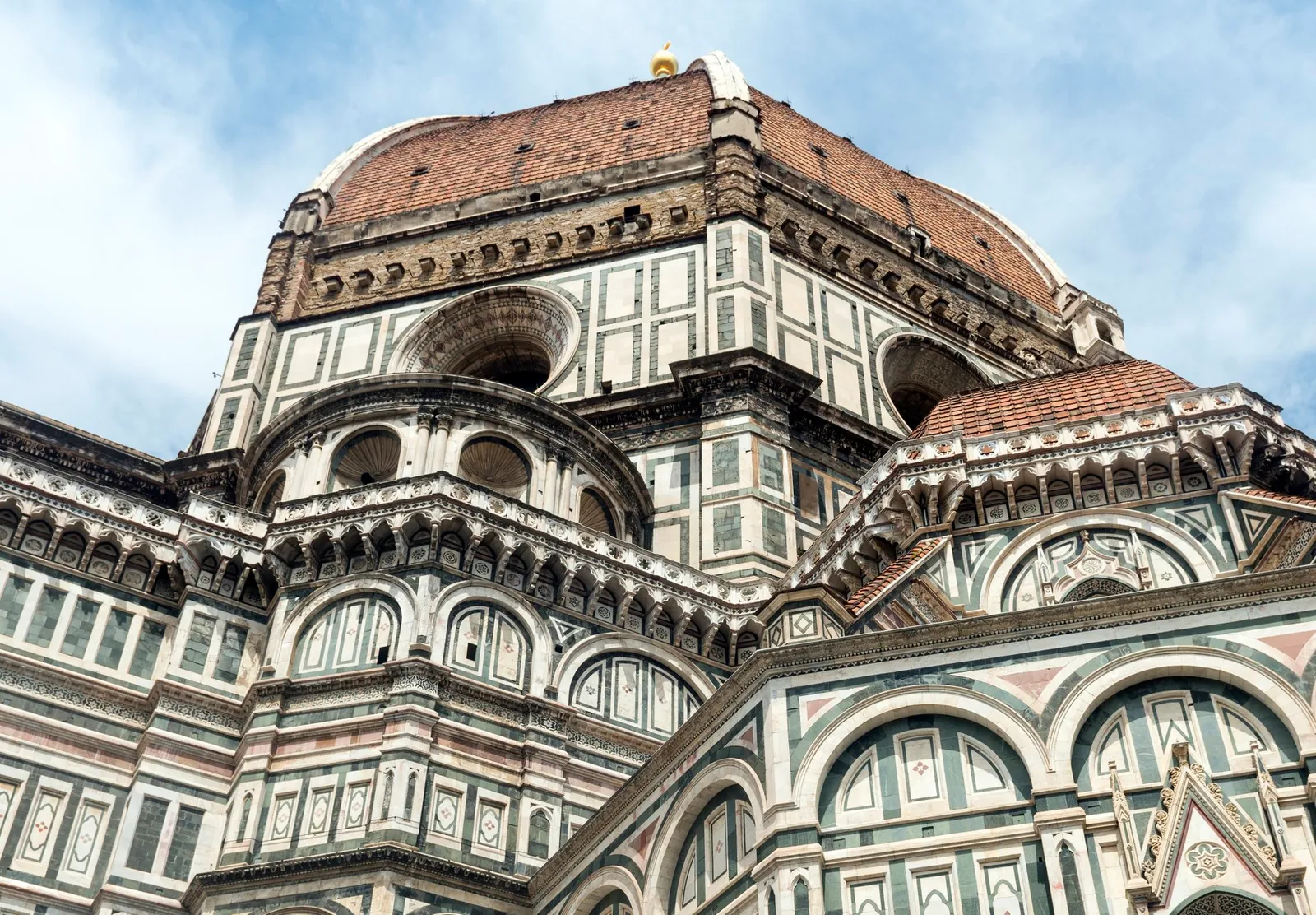
A side view of the Florence Cathedral, designed by Brunelleschi
In the late Middle Ages, architecture was dominated by the soaring spires of the Gothic style, pointing starkly toward heaven. Cathedrals were the most famous architectural achievements of the High Middle Ages. These immense structures, which could take a century to complete and demanded the labor of an entire community, were marked by expansive spaces and dramatic lighting that appeared to evoke heaven. In the Renaissance, though, designers including Filippo Brunelleschi brought classical Greek and Roman principles into architecture. Built to a human scale of measurement and marked by mathematical proportions, perspective and classical rationality, these buildings suggested a world of order and reason.
Music
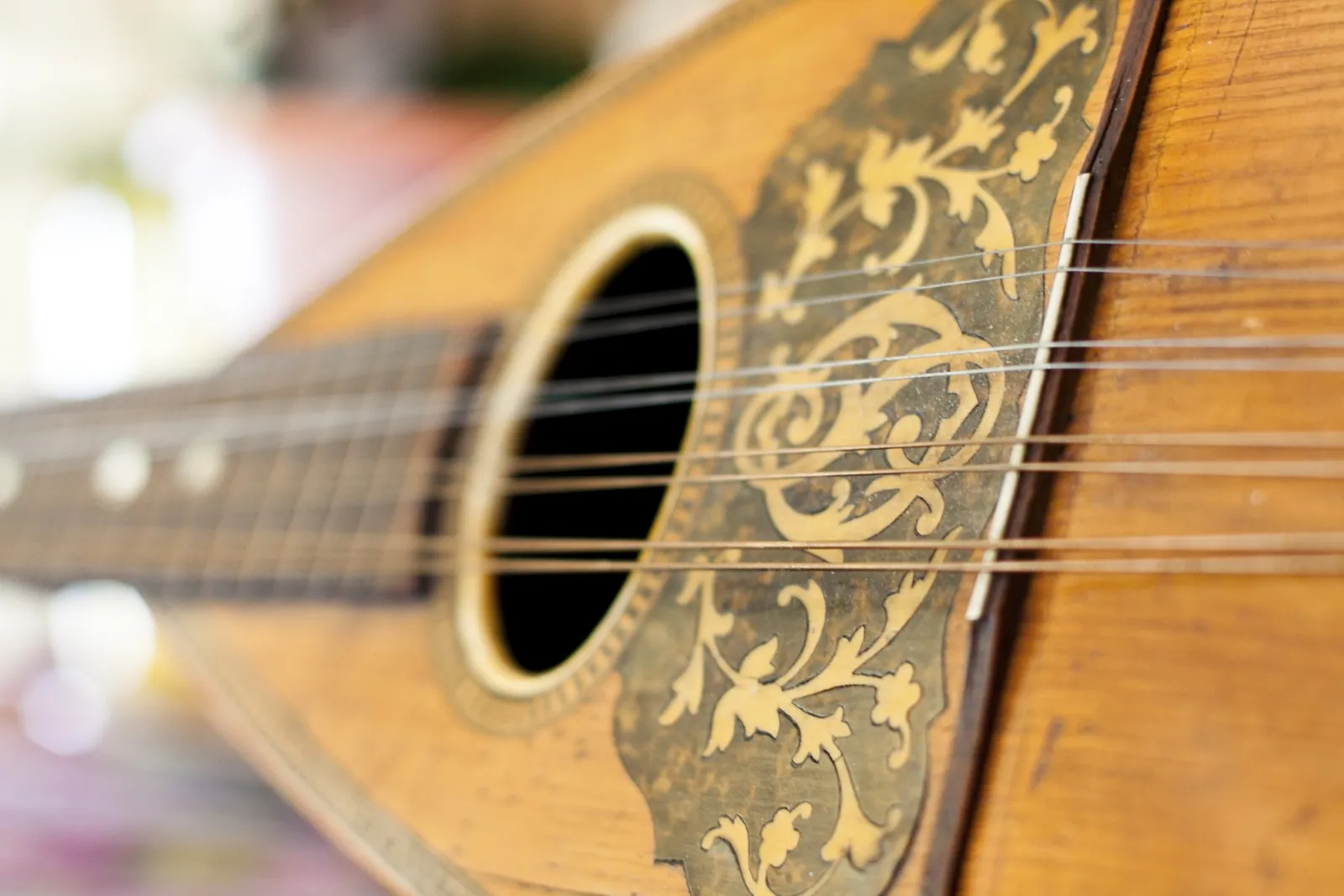
Close-up of a lute
In sacred music of the late Middle Ages, polyphonic plain chant—the Gregorian chant—was the leading style. It was a simple form of singing in which a chorus sang the same words in unison, and it changed during the Renaissance. Composers started adding techniques such as imitative polyphony, in which one half of a choir might sing one melody while the other half sang a different one, much like the 19th century song "Row, Row, Row Your Boat." Meanwhile, new musical instruments—the lute among them—helped bring about madrigals, short poems set to music that foreshadowed today's pop music.